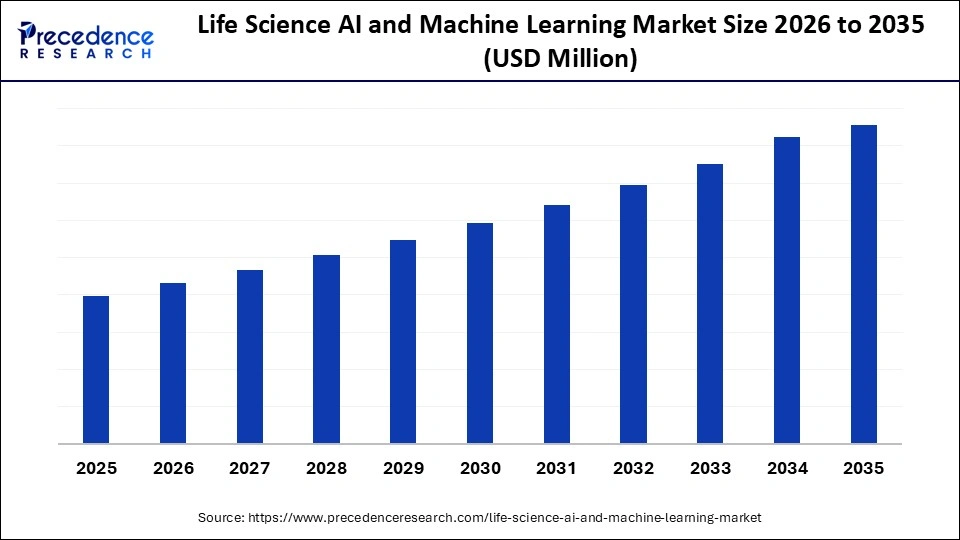
Middle Eastern and African governments are creating new opportunities for digital health and expanding the use of AI and machine learning in the life sciences sector by building national programmes that generate structured, research-grade datasets. Countries such as Saudi Arabia are advancing the Saudi Human Genome Program, which sequences large population cohorts and supplies variant data for ML-driven biomarker discovery and disease risk models. The UAE is implementing the National Genome Strategy alongside the Abu Dhabi Genome Program, both of which integrate genomic sequencing with hospital information systems and create datasets to support AI-enabled clinical decision-making tools. Qatar continues to expand the Qatar Genome Programme, which links whole genome data with phenotypic records to train predictive models for hereditary and metabolic diseases.
Governments are also promoting biotechnology research through state-backed centres that focus on molecular biology, vaccine development, and sequencing. These include national facilities within South Africa’s Medical Research Council Genomics Centre, which uses high-throughput sequencing to support infectious disease surveillance and computational biology studies. Egypt’s Human Genome Project adds another source of standardized genomic data for AI-assisted variant interpretation and precision medicine. As these programmes scale, they increase the volume of structured clinical and genomic information available for AI training across the region.
UAE Life science AI and machine learning Market Trends
The UAE has established itself as the focal point for rapid advances across the Middle East and Africa, supported by national strategies that prioritise AI integration, genomic science, and large-scale digital health modernization. The National Genome Strategy, launched in 2023 and the Abu Dhabi Genome Program initiated in 2021, form the core of this progress. These initiatives generate population-scale sequencing data and embed genomic insights into clinical workflows across hospitals in Abu Dhabi and Dubai. The country’s Artificial Intelligence Strategy 2031, announced in 2017, provides the policy framework that guides the deployment of machine learning tools in healthcare, research, and public health surveillance.
The UAE also serves as a platform for multinational biotechnology collaborations. Research institutions in Abu Dhabi and Dubai partner with global firms to develop algorithms for genomic interpretation, oncology biomarker analysis, and computational drug discovery. Projects linked to the Mohammed Bin Rashid University of Medicine and Health Sciences, the NYU Abu Dhabi Genome Technology Center, and the Cleveland Clinic Abu Dhabi research programmes support AI-assisted modelling in areas such as hereditary blood disorders, metabolic disease, and rare disease diagnostics.
link