
This story by Alex Hanson was first published in the Valley News on April 14, 2026.
RANDOLPH CENTER — Vermont State University plans to end its long-running associate degree programs for automotive and diesel mechanics and replace them with a certificate program that’s still being designed.
School officials notified the programs’ three faculty members in mid-January and held a meeting with the 27 students in the program in March.
The programs have been up for review at least since last fall. “In short, the declining enrollment, coupled with the expense of the facility, have made this program untenable,” Cathy Kozlik, VTSU’s dean of the school of business and professional studies, wrote to the program’s faculty on Jan. 14.
Supporters expressed concern that the loss of a program that should be in high demand is a sign that the university system isn’t doing enough to highlight the Randolph campus’ strengths, and that losing more programs does not bode well for the health of a school that has been in operation since the Civil War era.
“This program has kind of been under the gun,” said Steve Simpson, chair of the state university’s ground transportation systems program, which encompasses the diesel and automotive degrees.
A report last fall by Carnegie Higher Ed, a Westford, Massachusetts-based education research company, noted that fall 2024 enrollment was only 33 students and that expensive facilities costs contributed to the programs losing money in the 2023 and 2024 fiscal years.
Before the coronavirus pandemic, the programs regularly had 70 or more students, Simpson said.
Low enrollment aside, “student demand for these programs is high,” the report says. “VTSU is the only institution of higher education offering either program in Vermont, though the national competition is moderate.”
Instead of the associate degrees, VTSU plans to offer “industry recognized credentials” in automotive technology and diesel power technology. Current students in the program can continue through next year to complete their degrees, school officials have said.
The new programs would be “an apprenticeship model,” VTSU Provost Nolan Atkins said in a phone interview. Students would do coursework through the school, but the hands-on part of the program would take place at industry partners in the private sector.
This would benefit students by granting a credential in a shorter period of time and at less expense than the current two-year degree programs, Atkins said.
Current students are skeptical that the new programs would offer the same value as the existing ones, which they feel have been mismanaged and undersold.
“It’s kind of hard for me to comment on a program that does not exist,” James McGuire, a Tunbridge resident who enrolled in the diesel program as a career change from software development, said in a phone interview. He finished the first semester of the four-semester program before taking a leave of absence. He’s now unsure whether he can complete his degree.
For much of their history, the programs have been heavily subscribed. The automotive program, founded in 1990 by Kris Carlson, used to be housed on the Randolph Center campus of what was known as Vermont Technical College until 2023, when VTSU merged VTC with Northern Vermont University, which has campuses in Johnson and Lyndonville, and Castleton State University. The diesel program was housed in Middlebury and was brought to Randolph a decade or so ago.
That was a fateful step for the program, said Kip Stockwell, a Randolph native who graduated from the automotive program in 1995 and was a faculty member from 2005 to 2012.
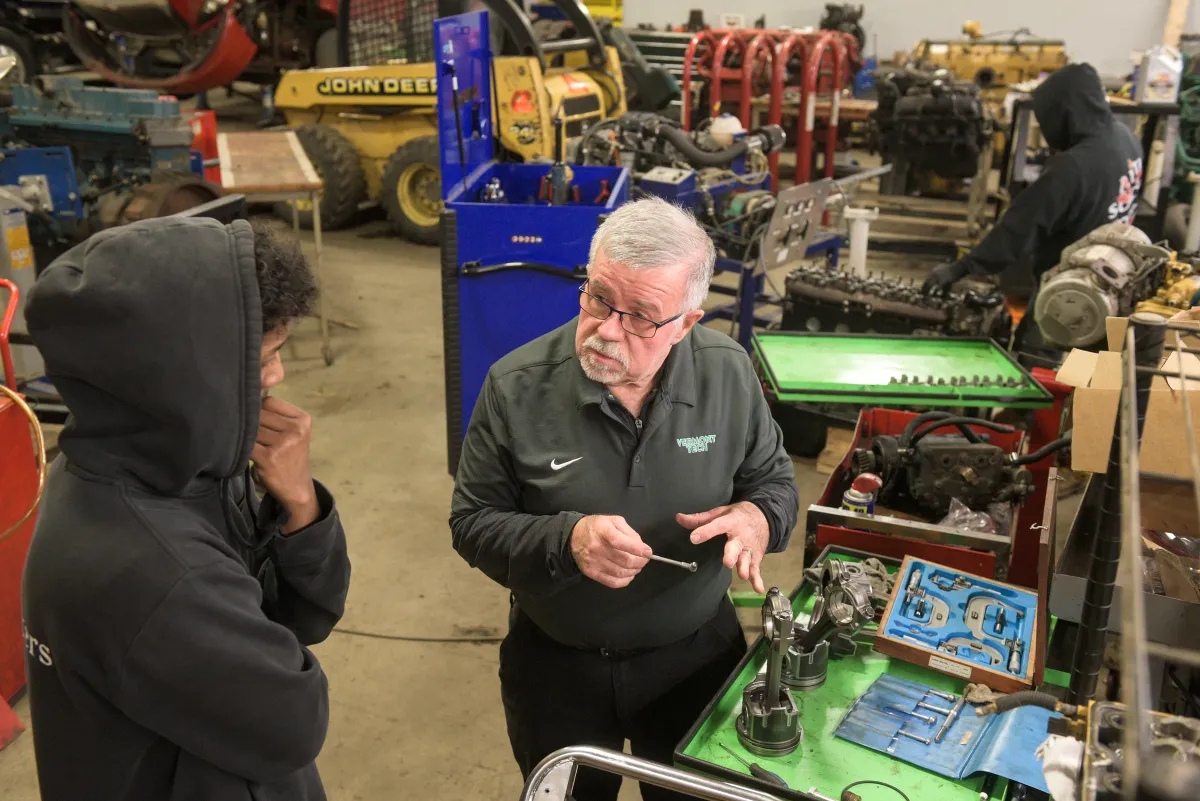
VTC rented space for the conjoined auto and diesel programs off campus. Though the programs work well together in the 20,000-square-foot garage the school leases, the annual rent of $175,000 is part of what puts them in the red, Stockwell and others said. The garage is part of a complex of commercial buildings about half a mile west of the campus on Route 66.
Administrators considered moving the program back on campus and to smaller quarters, but that didn’t solve the program’s “structural problems” of high cost and low enrollment, Atkins said.
After the report last fall put the programs on notice, no one from the administration ever came to talk to faculty and students about how to change the programs’ trajectory, Simpson said.
The most common complaint is that the university system did nothing to advertise the program, either in-state or out.
“If you want people to know that you exist, you have to tell them sometimes,” McGuire said. There are no ads for the program on social media or through Google, he said.
Even as school enrollment declines, Vermont is experiencing much higher technical school enrollment, McGuire said. “I find it really hard to believe that they can only get three people to show up” for the diesel program, he said. There were only three new students in the program this year.
Recruitment isn’t the only factor in enrollment, Atkins said. If a program isn’t easily accessible, then students won’t be able to attend.
“It’s really hard to uproot your life,” Atkins said. What’s more, “There’s considerable cost to earning these associate’s degrees.”
link